
Softshell or hardshell? One blocks rain completely. The other breathes and moves with the body. Neither one does the other's job. This guide sorts out exactly which is which, when to reach for each one, and how to avoid getting caught out halfway up a hill.
What's a Softshell Jacket?
A softshell jacket is a stretch-woven outer layer with a water-repellent surface finish, built to move with the body and breathe constantly rather than block everything out. Drizzle beads and rolls off for a while. Heavier rain eventually gets through.
The stretch comes from the weave itself, often a mix of nylon or polyester with a touch of elastane, which flexes with the shoulders and arms on a scramble or a long stride rather than fighting against them. Air moves through the fabric constantly, so sweat has an easy route out instead of slowly pushing through a membrane.
Reach for a softshell when:
- The forecast is mostly dry with wind or drizzle.
- The day involves scrambling, trail running, cycling, or fast hill walking.
- Cold and dry conditions mean a softshell alone covers the whole walk without an extra layer.
Skip the softshell when a soaking wet day is locked in. That's a hardshell day, every time.
Browse softshell jackets at Cotswold Outdoor.
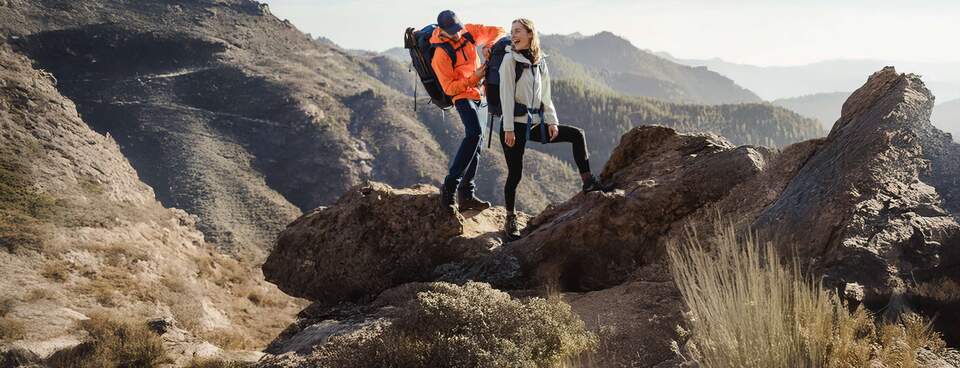
What About a Hardshell Jacket?
A hardshell jacket is a fully waterproof outer layer built from a membrane, such as GORE-TEX, bonded to a tough face fabric. Rain runs straight off the surface. Wind stops dead at the fabric. Sweat vapour escapes slowly through the membrane, which is why every hardshell relies on pit zips and back vents to dump heat during a climb.
The membrane does the real work here. Tiny pores are far too small for a raindrop to force through, yet large enough for water vapour to pass out from the inside. That's the entire trick behind waterproof breathable fabric, and it's why a soaked hardshell from the outside can still let a walker cool down from the inside.
Reach for a hardshell when:
- Heavy or sustained rain is forecast.
- Wind is strong and exposed; think ridgelines, summits, coastal paths.
- Winter walking calls for a shield layer over a mid layer.
- The trip has no shelter nearby, and the forecast could turn fast.
The tradeoff. Breathability drops. Even the best membrane can't shift heat as fast as open air, so a hardshell worn on a steep climb without venting turns into a sauna within minutes.
Shop hardshell and waterproof jackets built for UK rain at Cotswold Outdoor.
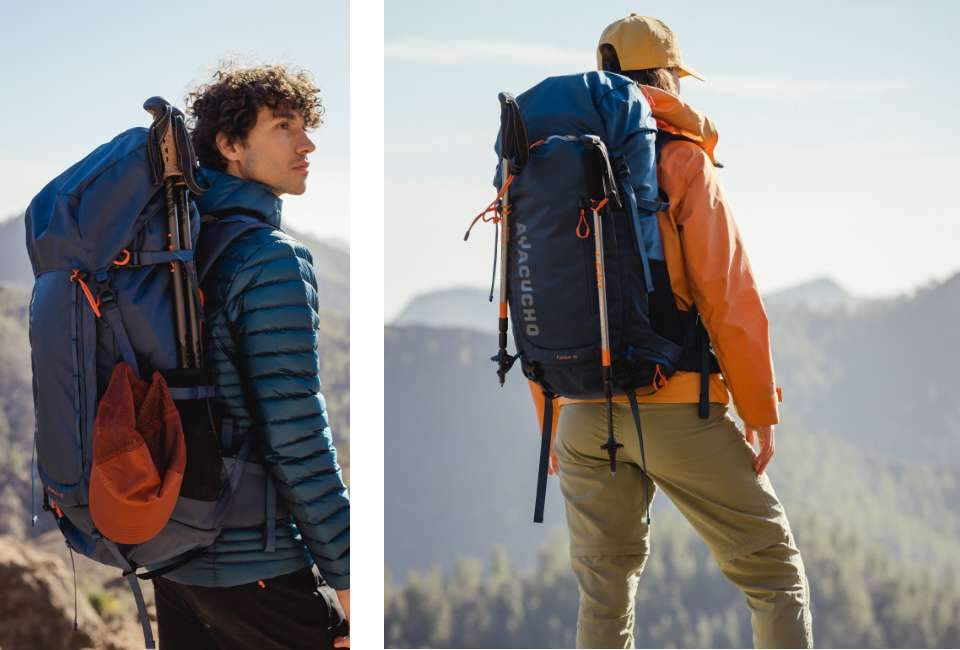
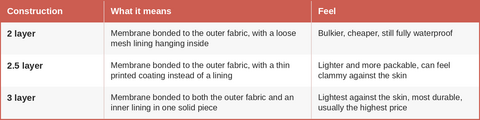
Not All Hardshells Are Built the Same
Hardshell jackets split into three construction types, and the difference actually matters when comparing prices on a shelf.
Not All Softshells Are Built the Same Either
Softshell fabric splits roughly into two camps.
1. Woven softshell uses a tightly knit face fabric, often with a membrane or laminate bonded on the inside for extra wind blocking. It feels closer to a light hardshell, stretches less, but holds up well against abrasion on rock or scrub.
2. Fleece-backed softshell pairs a woven outer with a brushed fleece lining inside. It holds more heat for the same weight, feels warmer against the skin on cold mornings, but breathes slightly less than a plain woven softshell during a hard climb.
Match the type to the activity. Fleece-backed suits cold-weather walking and general use. Woven suits scrambling, running, and anything where wind blocking and a close, athletic fit matter more than extra heat.

How Softshells and Hardshells Work Together
These two jackets rarely need to compete for the same hook on a longer trip. Most walkers end up carrying both and switching between them as the weather shifts through the day.
A typical setup on a mixed forecast:
- Start in the softshell. It breathes, blocks wind, and copes with a bit of drizzle during the warm up.
- Pack the hardshell in the rucksack, ready the moment rain sets in properly or wind picks up on an exposed section.
- Swap back to the softshell once the rain clears and the climb gets steep again.
On genuinely cold days, a softshell can sit underneath a hardshell as a wind-blocking mid-layer, adding a bit of extra stretch and heat retention without the bulk of a full insulated jacket. That combination suits winter walks where rain is likely, but the effort level stays high.
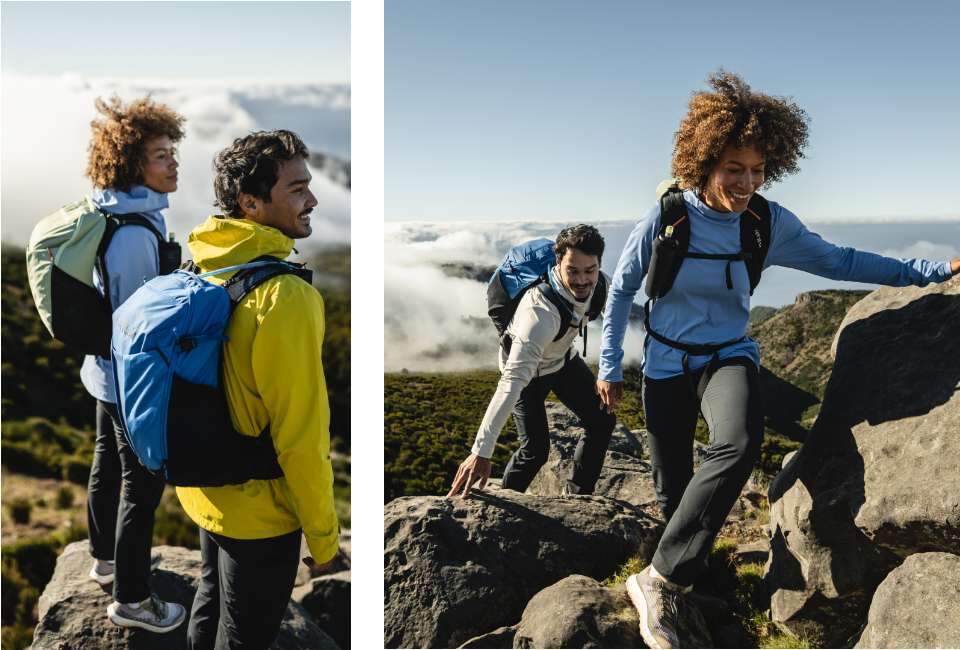
Softshell or Hardshell: Decide in Four Questions
Ask these before stepping out the door.
- Is heavy rain forecast? Take the hardshell.
- Mostly dry with wind or light drizzle? Take the softshell.
- Hard, sweaty climbing on the cards? Softshell first choice. Hardshell with vents open as backup.
- Is the trip long, remote, or exposed with no shelter? Carry both, whatever the forecast says.
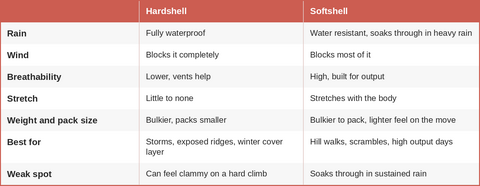
Hardshells block rain and wind completely, at the cost of breathability. Softshell breathes and stretches, and covers wind plus light rain but not a downpour. Most walkers end up needing both, switching between them as the weather shifts through the day, rather than picking a single winner. Shop softshell jackets and hardshell jackets at Cotswold Outdoor and get kitted out before the weather turns.
FAQs
A hardshell is fully waterproof and stops all rain. A softshell breathes better and stretches with the body but only resists light rain and wind.
For a while, yes. The water repellent surface finish makes light rain bead and roll off. Heavy or sustained rain eventually soaks through.
On a hot, dry day, yes, mostly. A hardshell traps heat faster than it can vent it, so summer walkers usually reach for a softshell or a light windproof instead, and keep the hardshell packed away for a sudden shower.
No. A softshell is built to resist wind and light rain, not to stop a downpour. Calling a softshell waterproof sets the wrong expectation. Water repellent is the accurate term, and it's a different job entirely from a hardshell's fully sealed membrane.
Yes, and it does the job well since wind cannot pass through the membrane at all. It's a bit heavier than a dedicated windproof for that single purpose, so anyone chasing minimum weight for a fast, dry, windy day might still prefer a light softshell or a standalone windproof shell instead.
Let us know you agree to cookies
We use marketing, analytical and functional cookies as well as similar technologies to give you the best experience. Third parties, including social media platforms, often place tracking cookies on our site to show you personalised adverts outside of our website.
We store your cookie preferences for two years and you can edit your preferences via ‘manage cookies’ or through the cookie policy at the bottom of every page. For more information, please see our cookie policy.