An image of a person zipping up their insulated jacket

Insulated Jackets Buying Guide

A shop full of puffer jackets, coats and parkas all raises the same question: which one actually keeps the cold out?

Wind gets through a thin shell in seconds. Cotton soaks up rain and stays wet for hours. An insulated jacket sorts all of that, trapping a layer of warm air close to the body using down feathers or synthetic fibres. Get the right one and cold weather stops being a problem you have to plan around.

What Is an Insulated Jacket?

Insulated jacket: a jacket filled with down or synthetic material that traps warm air close to the body, cutting heat loss in cold conditions.

Three things make that work:

  • Trapped air. Still air is a poor conductor of heat, so trapping it stops your body heat escaping.
  • Loft. The fluffier the fill, the more air it traps, and the warmer the jacket runs for its weight.
  • A shell fabric. The outer layer holds the fill in place and adds wind resistance, sometimes water resistance too.

Down vs Synthetic Insulation

Down insulation is a natural fill made from the soft clusters found beneath a goose or duck's feathers, prized for trapping huge amounts of warm air for very little weight.

Synthetic insulation is a man-made fill built from polyester fibres, built to copy down's structure while holding up far better when wet.

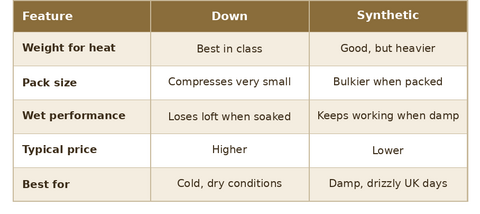
That table is the whole decision at a glance. Cold and dry, go down. Wet and mild, go synthetic.

Ready to choose? Shop down jackets or insulated jackets for men and women. 

Fill Power Explained

Fill power measures how much space one ounce of down fills when it lofts fully. Higher numbers mean higher quality down, not simply more of it.

  • 500 to 600 fill power: good for everyday winter wear and short outdoor trips.
  • 600 to 700 fill power: a solid middle ground for regular hillwalking or cold commutes.
  • 700 fill power and above: built for serious cold, high altitude, or anyone chasing maximum heat for minimum pack size.

One rule worth remembering: fill power alone means nothing. A jacket with sky-high fill power but almost no fill weight can still feel thin. Check both numbers, always.

Puffer, Parka or Duvet Jacket: Pick Your Shape

Same fill, different job. Here's what each style is actually built for.

  • Puffer jacket: short and boxy, sitting around hip length with quilted baffles. Built for movement, so it's the go to for hillwalkers.
  • Parka: longer, running to mid-thigh or past the knee. Built for standing still in the cold rather than moving fast.
  • Duvet jacket: a UK term for a long, heavily filled down coat that genuinely does feel like wearing your bedding outdoors.

Moving around a lot? A long parka or duvet jacket will bunch up under a rucksack hip belt. Stick with a puffer. Standing still for hours, at a match or a market stall? The extra length on a parka earns its keep.

Waterproof or Water Resistant?

Water-resistant or showerproof jackets have a coating that beads off light rain for a short time, but they will soak through in sustained downpours.

Waterproof insulated jackets use a fully sealed, taped membrane that keeps water out even in heavy, prolonged rain.

Need one jacket that does it all?  Shop waterproof insulated jackets for men and women now, or look specifically for down and waterproof jackets if you want down's heat retention without carrying a separate shell.

Baffles: The Small Detail That Changes Everything

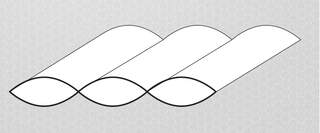
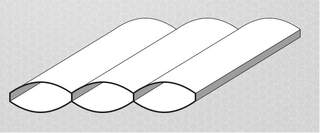
Baffles are the stitched compartments that hold a jacket's down or synthetic fill in place. How they're built changes how much heat escapes through the seams.

Stitch-through

Stitch-through baffles keep the insulation evenly distributed. However, the stitched areas can cause heat to be lost.

Box wall

Box wall baffles allow the insulation to expand to its maximum loft, and the stitching is designed to reduce heat loss.

The Five Question Checklist Before You Buy

1. What temperature range will you actually face? UK autumn needs far less fill power than winter hillwalking or cold weather.

2. How often will it get properly wet? One jacket for everything means waterproof. Regular hill days mean showerproof plus a shell.

3. How much does pack size matter? Down wins, especially at higher fill power, whenever it needs to disappear into a rucksack.

4. Moving or standing still? Standing still jackets can run warmer. Moving jackets need to breathe and vent heat.

5. How does it sit over your usual layers? Try it on over a base layer and a middle layer, not a thin top in a heated shop.

Caring for a Down or Insulated Jacket

Get this wrong, and even the best jacket goes flat fast. Get it right, and it lasts a decade.

Squashing a down jacket into a stuff sack for months at a time crushes the loft out of it. Hang it up or store it loosely folded instead.

Standard detergent strips the natural oils from down. A specific down cleaning product on a gentle, low-temperature cycle keeps the fill working.

A low-heat tumble dry, with a couple of clean tennis balls thrown in, breaks up clumps and brings the loft back.

For small marks, a damp cloth and a mild soap beat a full wash every time. Fewer washes, longer life.

A durable water-repellent finish is applied to the outer fabric, making rain bead off rather than soak in.Once a shell fabric stops beading water, a wash in fabric reproofer restores the effect in minutes.


Cold and dry means down. Wet and mild means synthetic. One jacket for everything means waterproof. Regular hill days mean showerproof plus a shell. Fit matters as much as fill power, and men's and women's cuts are genuinely built differently.

Ready to gear up? Shop the full range of down and insulated jackets for men and women at Cotswold Outdoor.

FAQs

High fill power goose down, generally 700 fill power and above, beats every other common insulation type for heat retention against weight.

Synthetic wins in the rain, holding onto loft and heat retention once damp. Down performs best in cold, dry conditions or under a fully waterproof outer layer.

Fill power is the volume, in cubic inches, that one ounce of down expands to fill. Higher numbers mean fluffier down and less material needed for the same heat retention.

Yes, on a gentle, low temperature cycle using a specific down cleaning product. Standard detergent strips the natural oils out of down, so avoid it. Tumble dry on low with a couple of tennis balls to restore loft.


Related Articles


Let us know you agree to cookies

We use marketing, analytical and functional cookies as well as similar technologies to give you the best experience. Third parties, including social media platforms, often place tracking cookies on our site to show you personalised adverts outside of our website.


We store your cookie preferences for two years and you can edit your preferences via ‘manage cookies’ or through the cookie policy at the bottom of every page. For more information, please see our cookie policy.